

Cotswold Regenerative Agriculture Conference 2026
Apr 09, 2026
Public Engagement Coordinator, man of the people and regenerative agriculture newbie Alex Dye reports on the days events
The sun beams down on Cirencester as an ‘anyone-who’s-anyone’ group of farmers, academics and policymakers arrive at the Royal Agricultural University for what promises to be an inspiring day. We’ve arrived for the Cotswold Regenerative Agriculture Conference.
After catching up with the team from Microbz (who had been at FarmED only weeks earlier for a lunchtime talk), filmmaker and visionary of the upcoming Field & Folk film Tea Smart and agricultural journalist and storyteller Anna Jones of Just Farmers fame, we settled in for the first sessions of the day.
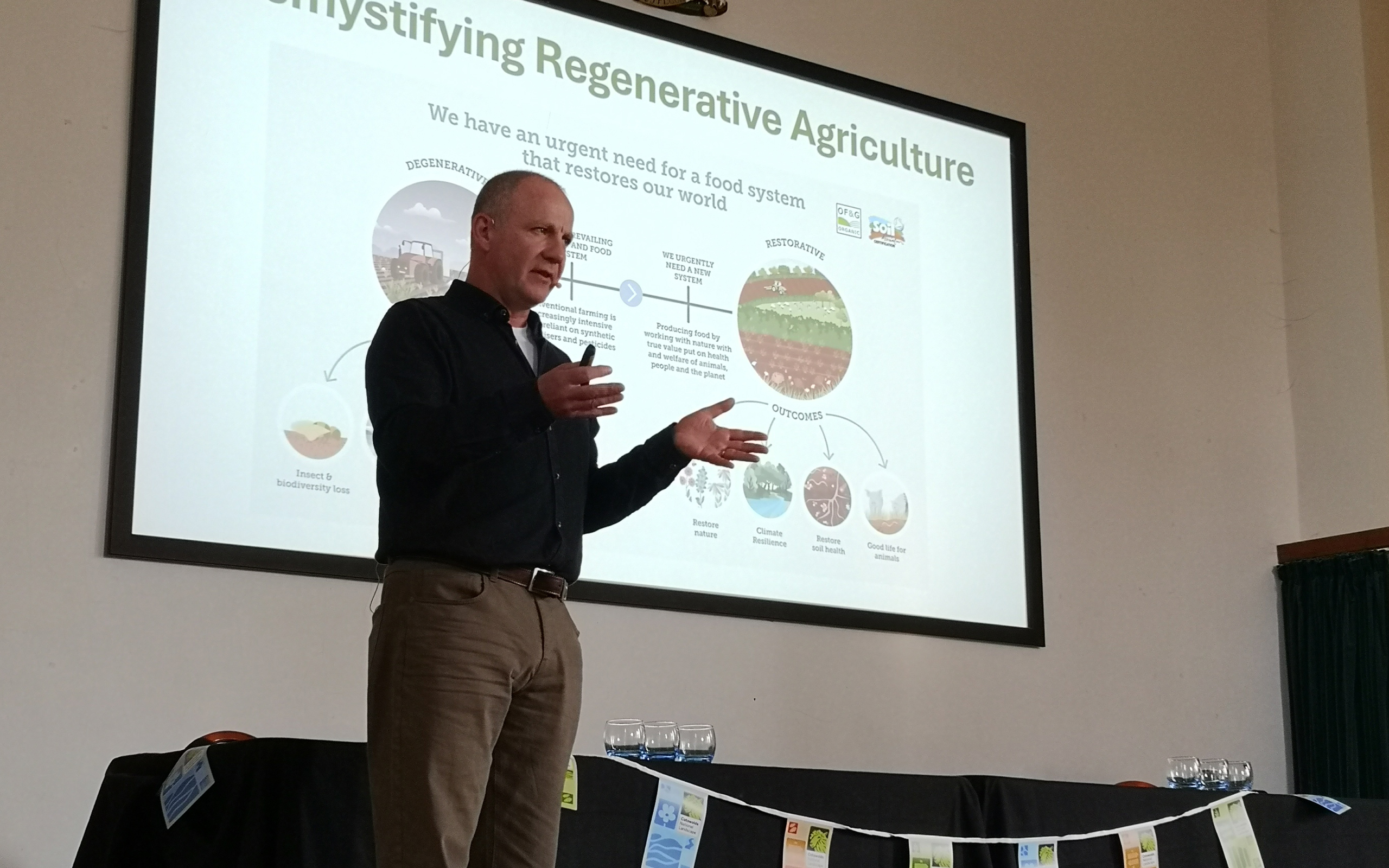
Jonty Brunyee of Conygree Farm kicked off the day, with a talk that set the scene for the world of regenerative agriculture. This included his definition of what he describes as ‘Regen Lite’ and ‘Regen Deep’ and an overview of agroecological and regenerative principles. He was then joined by Lucy Robbins, a farmer at Nosehill farm and member of the RAAP (Regen Agriculture Accelerator Programme) group, to discuss the importance of bringing new people into this space to encourage new ideas and perspectives.
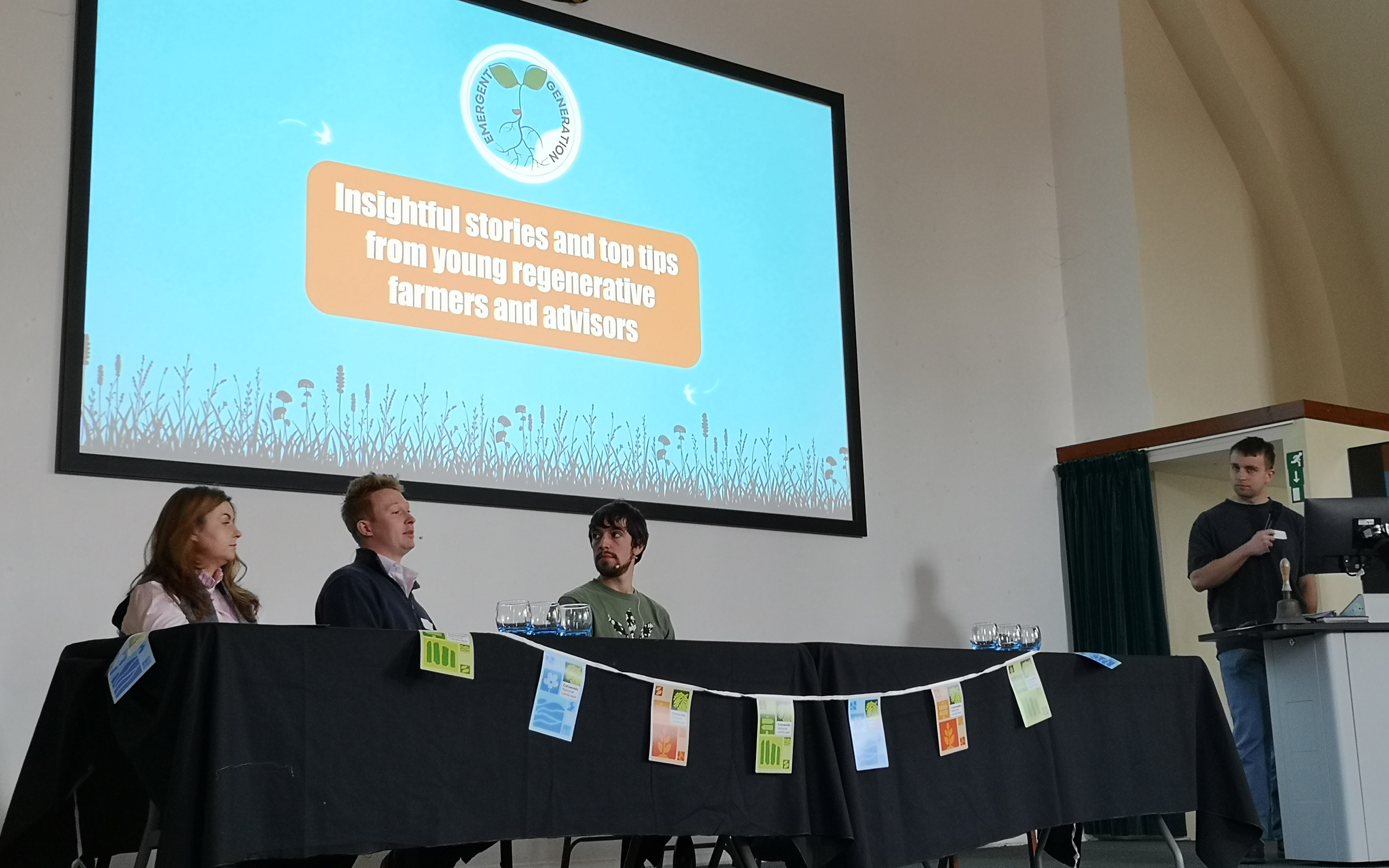
The generation emerges to share stories of their successes and struggles
Mitch Green then fronted a panel discussion on youth network, Emergent Generation, with speakers including Tristan Leslie from FAI Farms, Ben Adams of Lower Farm and Neave Anderson from Hartpury University discussing how being part of this network has allowed them to thrive, improve their knowledge and experiment with new technologies and practices.
After a networking break with coffee so strong it could remove the need for diesel as a fuel for tractors, the next session discussed enterprise stacking and joint ventures. Landmatch, Abunda and Pitch Up! were discussed with regards their abilities to match people looking for land for their businesses or projects and funding. Emily Franklin of Upper Marsh Farm in Tetbury discussed her journey coming back to the family farm and taking the regenerative plunge to diversify the site, whilst Eric Walters of Good Small Farms and Jack Knott of Litchfield Farm spoke about how they’ve made their own farm businesses thrive by encouraging diversity in their portfolio.
Helen Wyman of Twocan Mentor and Scott Brown of Berks, Bucks and Oxon Wildlife Trust (BBOWT) and the RAAP programme both spoke about mentoring in the farming space, with particular reference to pairing up mentors to help guide people through difficult or complicated regenerative practices, or through parts of the food sector.
After a buffet lunch which included a selection of locally sourced, meats, cheeses, vegetables and breads in the form of sandwiches and sausage rolls for vegetarians and meat eaters alike, the next session focussed on the story of Dan Smith, a farmer from Monmouthshire. Not too long ago, Dan finished a Nuffield Scholarship looking at encouraging young people from diverse backgrounds into the agricultural sphere. His story touched on giving underprivileged teenagers and migrant workers a place to thrive as part of his therapeutic farm, his journeys around the world and his work as director of the Oxford Farming Conference.
The masses then broke out into different groups for the afternoon workshop sessions. Our Farming Outreach Coordinator Matt went to learn about adaptive multi paddock grazing with Tim Williams, whilst others took part in a session with Anna Jones on storytelling and media creation to reach your audience and some looked into the power of collaboration with Jenny Phelps, Tim Field and Alex Donnelly. Some took the chance to go and look at the Market Garden at the onsite farm, and Alex took the opportunity to have a tour of the farm itself with Savill’s Ed Horton. Ed boasted of the farm’s pretty much non-existent pest issues, stating that after 12 years of using no chemical pesticides at all, the local environment is so healthy and rich with insect natural enemies, they haven’t had significant pest pressure for a long time - as he was saying this, his black labrador Iona decided to provide some pest pressure by pulling up and eating several oilseed and kale plants.
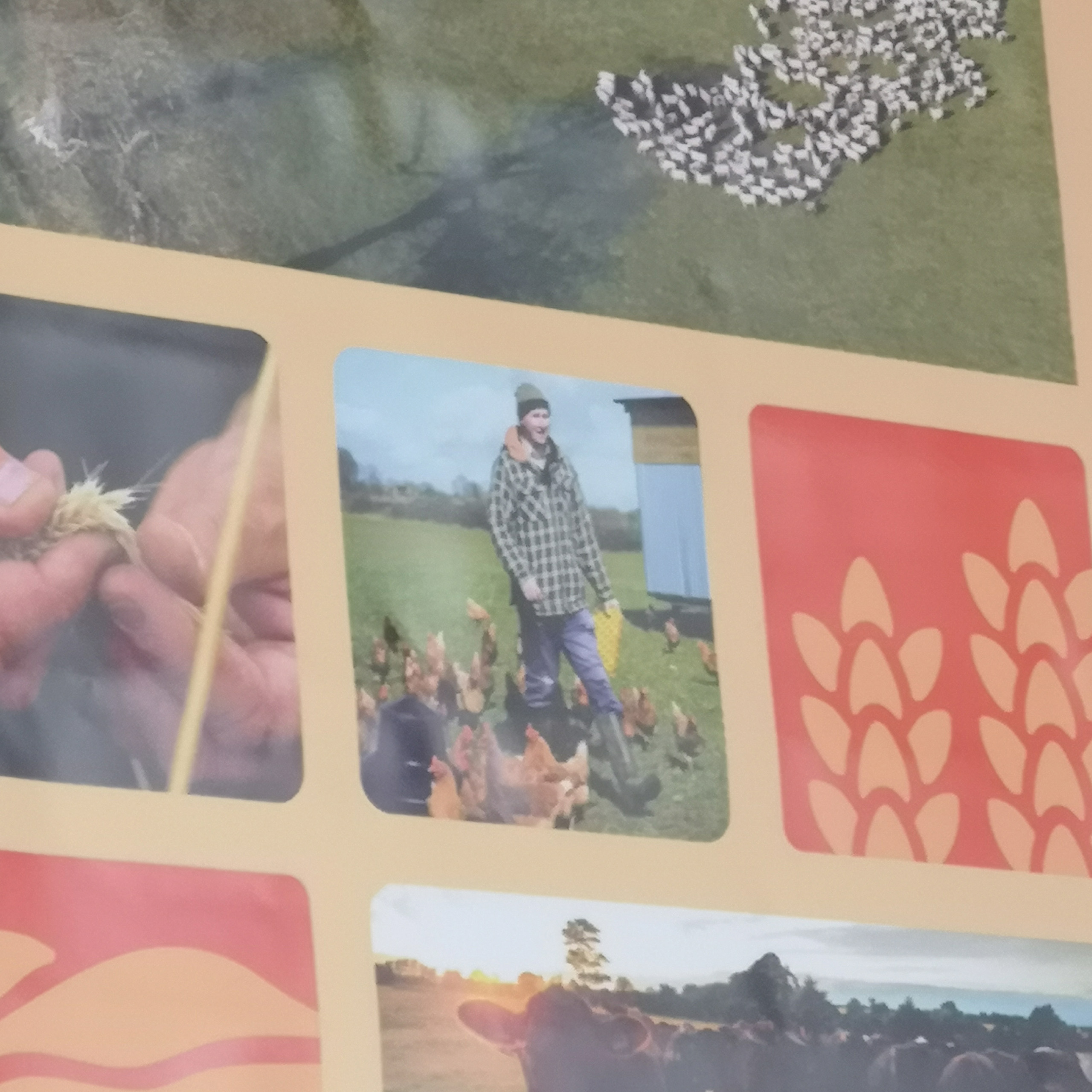
FarmED’s Matt Elliott was the literal poster-boy for the event
Anna Jones spoke once more to the whole group, discussing how the divide between certain communities and groups has led to misunderstandings and misrepresentations of food and farming, and what we can do to bridge those gaps to ensure we build trust, have meaningful conversations and create a space to foster positive change in the agricultural world.
After Jonty and Rebecca Waite discussed the next steps and the future of the RAAP project, Dame Fiona Reynolds wrapped up proceedings and the day drew to a close, with a room full of people leaving the site feeling inspired, having made great new contacts and ready to make positive changes both big and small in the realm of agriculture.
Recent news items