

Growing Britain’s Buildings with Hemp
Oct 06, 2026
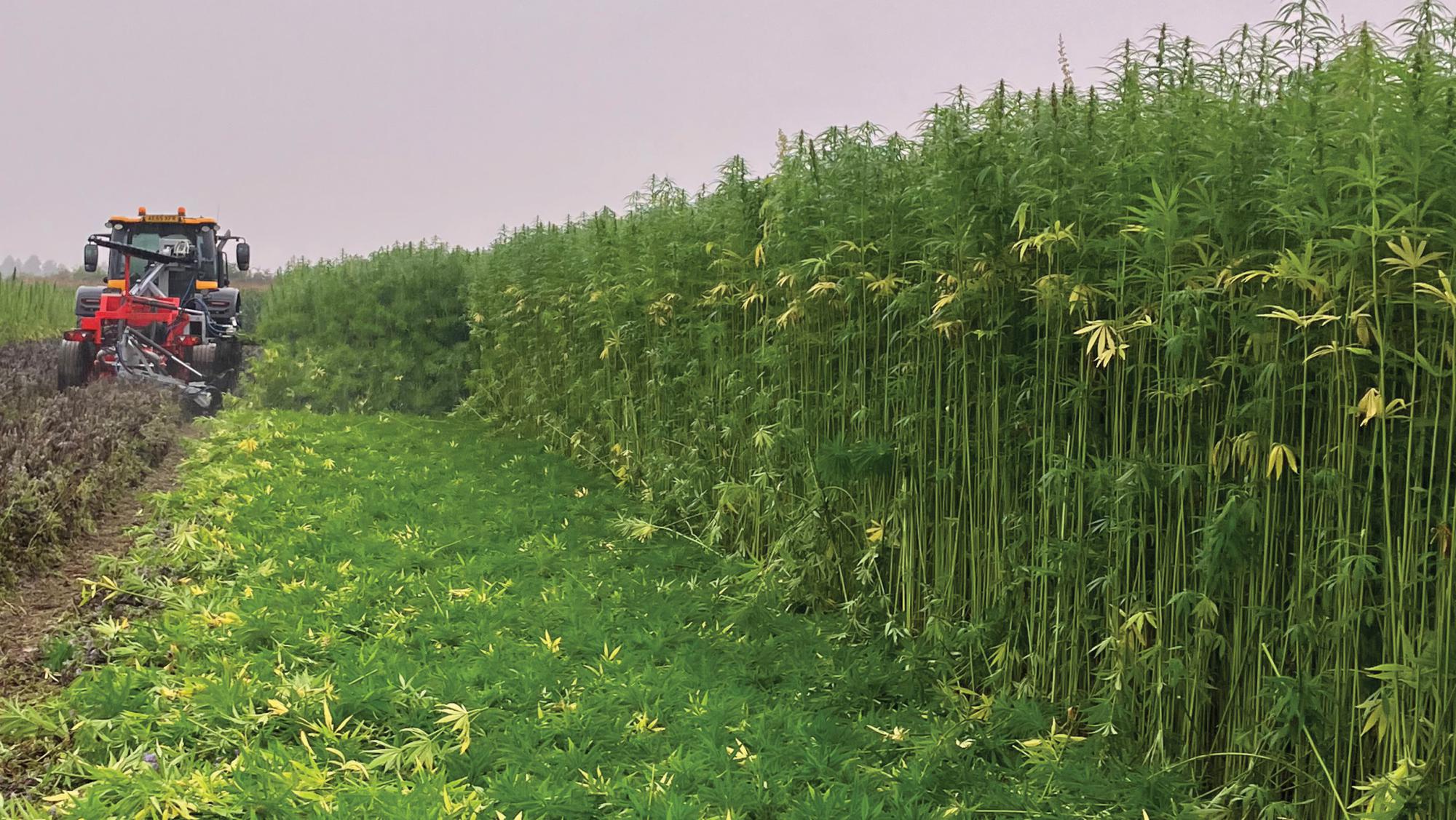
FarmED, working with leading architects and scientists, has highlighted an opportunity for British agriculture to supply the construction industry with locally grown, bio-based building materials, bringing huge environmental benefits and opportunities for British farming, manufacturing and construction.
FarmED is one of the partners in the Defra-funded Centre for High Carbon Capture Cropping (CHCx3) project, aimed at increasing carbon capture through farmed crops and their utilisation and we’ve recently opened a new conference space, Little Barn, which is built using industrial hemp. It was designed by Timothy Tasker Architects and showcases how:
- Around 3 acres of farmland could provide enough hemp for the hempcrete walls of a typical family home.
- The crop can be grown and harvested within a single growing season.
- A 1,500-acre farm could supply enough hemp for the walls of around 500 family homes every year.
- Just 2–3% of the UK's arable land could make a significant contribution to future UK housebuilding.
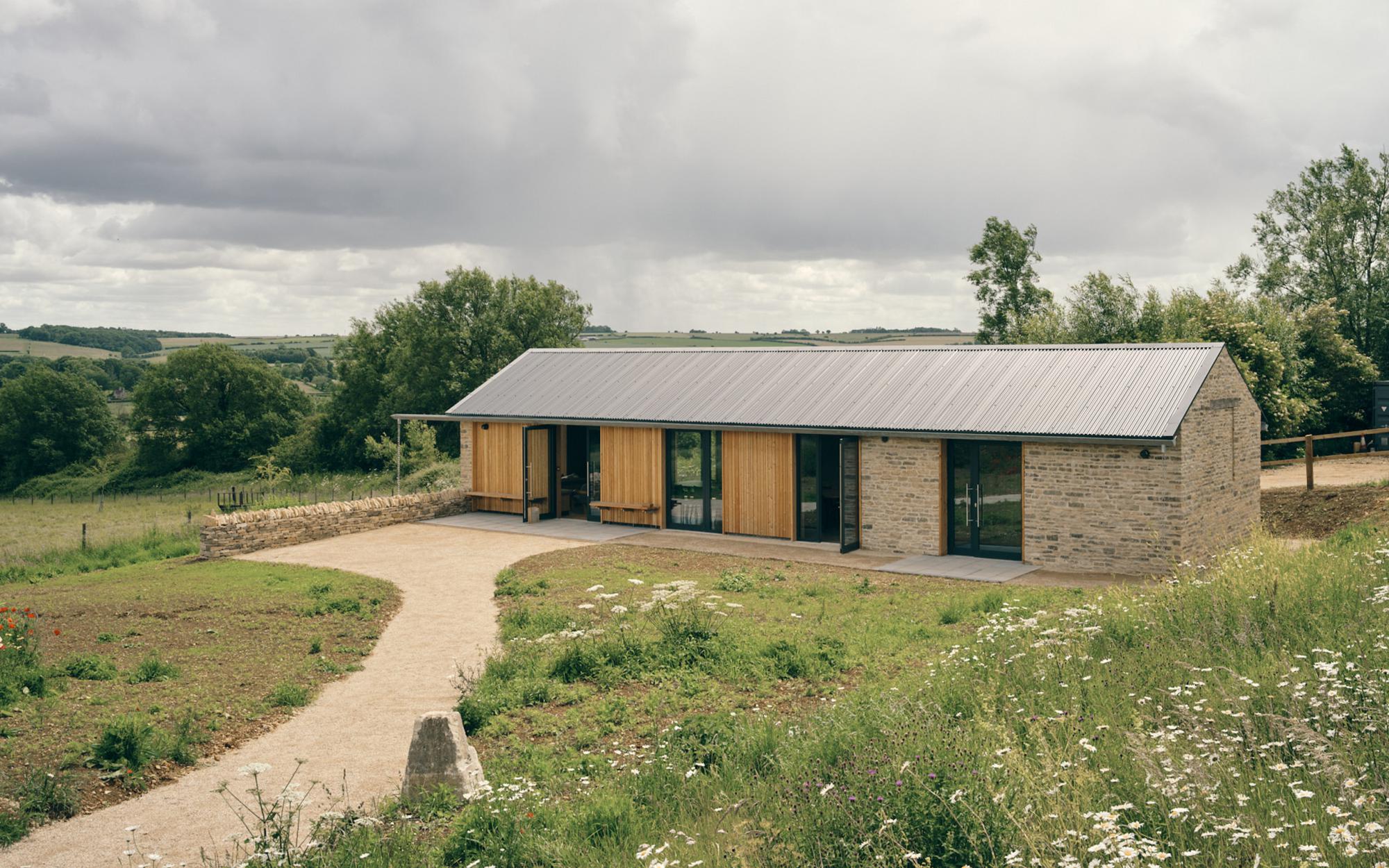
The hemp barn!
Industrial hemp brings excellent environmental benefits. Its fast annual growth allows the crop to sequester up to 22 tonnes of carbon dioxide per hectare each year - more than any other crop or woodland. (Hemp-30)
Dr Lydia Smith (NIAB and FarmED), who heads up the CHCx3 Project explains how, being an annual spring crop, hemp prepares the soil for a better wheat crop in the next season and requires minimal input other than nitrogen in some areas. In addition to the building materials, industrial hemp will contribute 10 tonnes or more of organic carbon and root biomass to the soil, which helps to restore soil function. Due to the low inputs and low disturbance, an industrial hemp field provides a safe summer environment for farmland wildlife; including birds, hares and small rodents such as field mice that are vital to owls and other endangered species.
With hotter summers, an important benefit of hemp is its thermal qualities. Hemp walls can delay summer heat entering a building by more than five hours (1). Testing has recorded a thermal lag of around 320 minutes through hempcrete construction, delaying the passage of peak daytime heat into the building. Hemp also helps buffer humidity and internal temperature swings, improving comfort during prolonged periods of hot weather (2). It has excellent acoustic qualities and is fire resistant. (IOS Hemp)
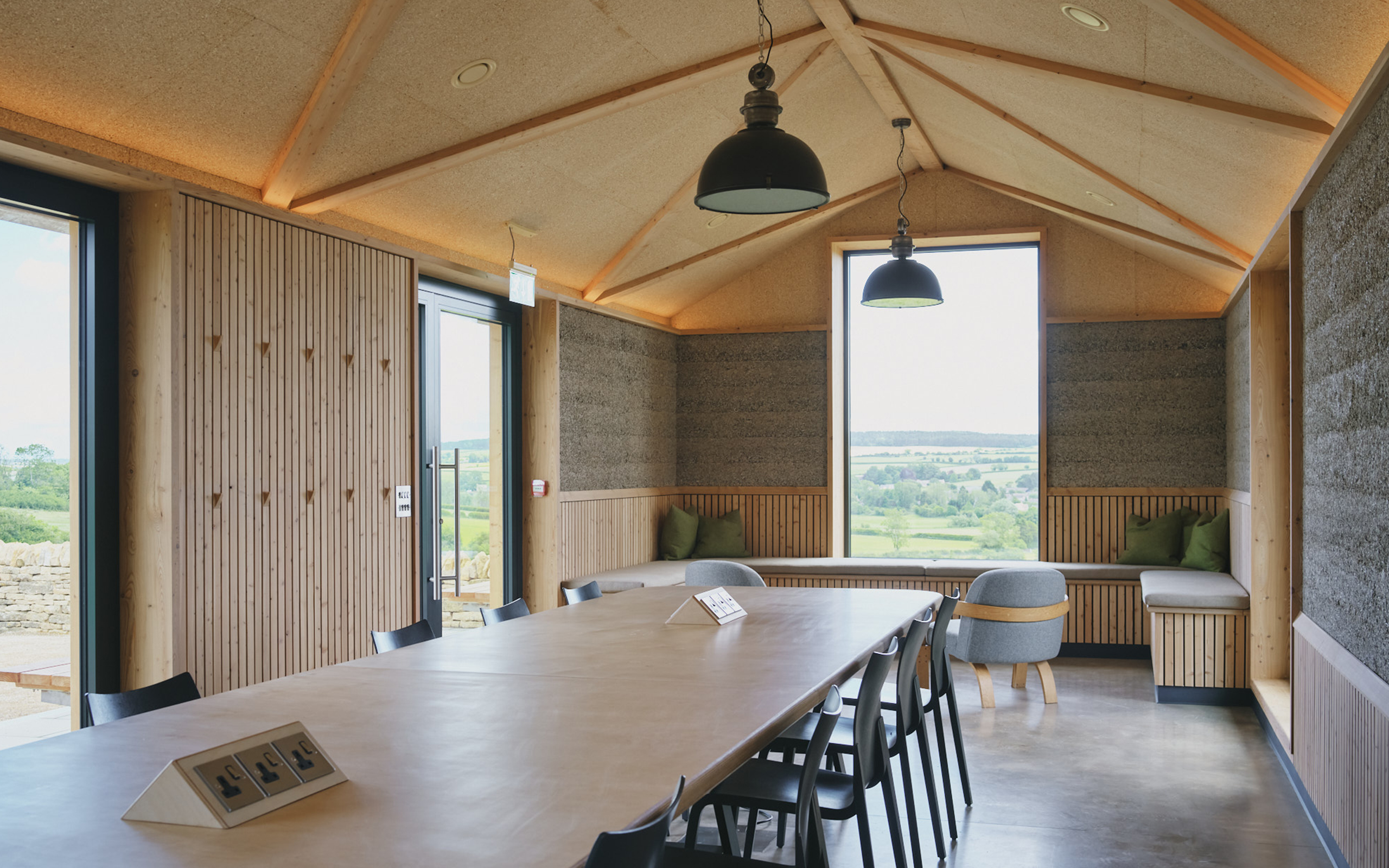
The hempcrete and hemp boards are a feature within the barn.
FarmED co-founder, Ian Wilkinson says: ‘FarmED is a place where people meet to have important conversations about the future of farming so we are delighted to showcase the wide range of benefits of hemp in our new venue. As well as the environmental benefits hempcrete creates a beautiful and inspiring indoor environment.’
References & Notes:
Industrial Hemp is a variety of the Cannabis sativa species containing less than 0.2% THC. It has a number of lawful markets, for example in construction, food oil and textiles.
Farmers interested in growing hemp must obtain a controlled drugs domestic licence from the Home Office. They need to show a defined commercial end use, and licences are only issued for cultivation of industrial hemp varieties from an approved list of varieties with a THC content not exceeding 0.2%.
The Hemp-30 project led by University of York aimed to catalyse a major expansion of the breeding, growing, harvesting and utilisation of industrial hemp as a UK crop through the 2020s and 2030s. This aim was taken up by the CHCx3 project to significantly increase UK biomass production and so reduce the country’s greenhouse gas emissions and help drive a Green Industrial Revolution.
In 2023 the UK was growing around 800 hectares of industrial hemp. (Hemp-30)
- Colinart et al., Energy and Buildings (2014), “Study of hygrothermal behaviour of a hemp concrete building envelope under summer conditions in France.”
- Seng et al., Building and Environment (2022), “Hygrothermal performance of hempcrete buildings.
Links
Timothy Tasker Architects https://www.ttarchitects.co.uk/
Centre for High Carbon Capture Cropping Project https://www.carboncapturecropping.com/
Organisations interested in hiring FarmED’s Hemp Barn should contact sophie@farm-ed.co.uk.
Recent news items